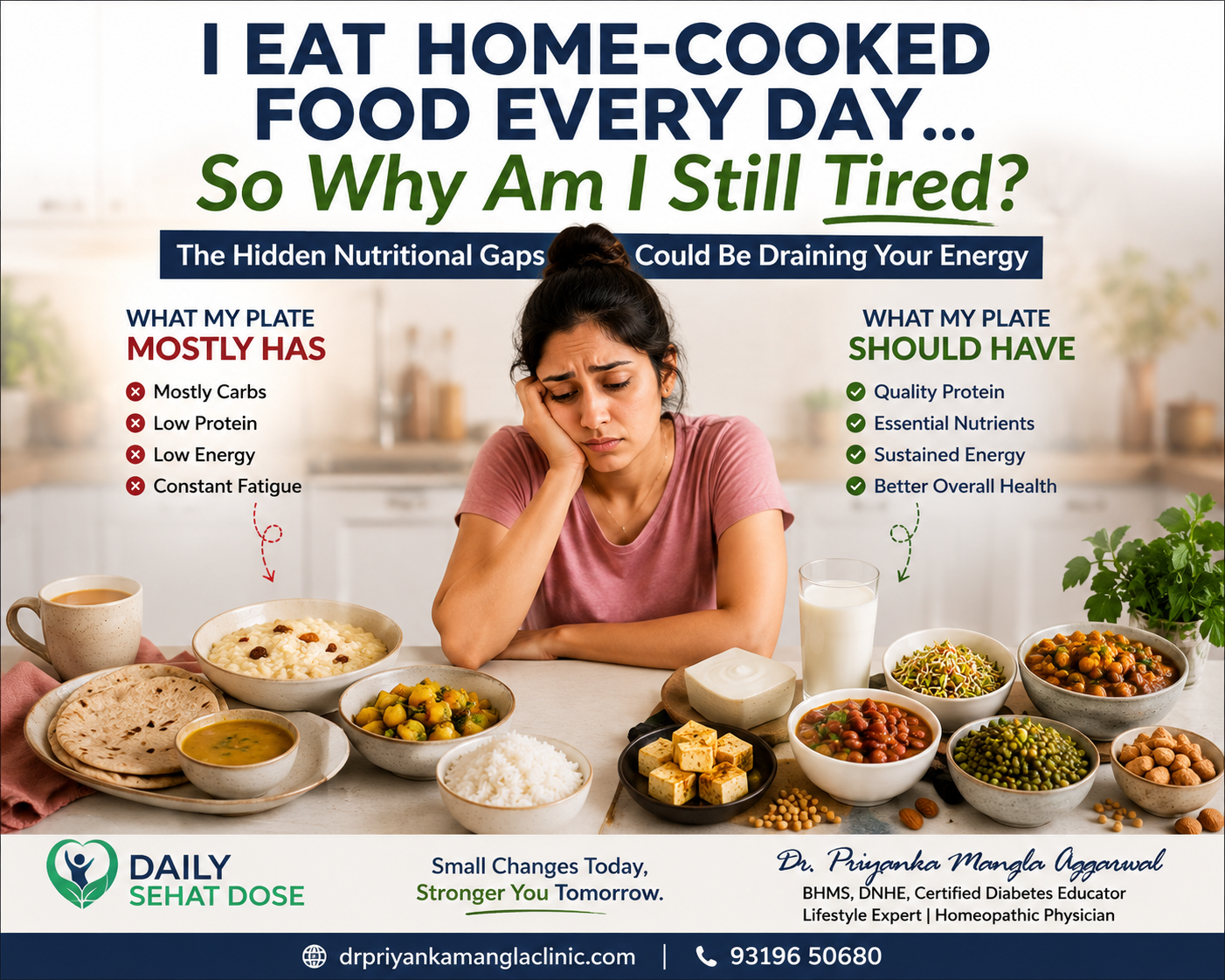
Part 3: “I’m Eating Better… So Why Am I Still Tired?”

By now, Megha had made several changes.
She started including protein in every meal.
Breakfast was no longer just tea and biscuits.
Lunch wasn’t just roti and vegetables.
She added curd, sprouts, paneer, dals, and learned how to build a more balanced vegetarian plate.
Three weeks later, she returned.
She smiled.
“I do feel better…”
“But I’m still not back to my old self.”
That was an important clue.
Because as doctors, we must avoid jumping to conclusions.
Not every tired person has a protein deficiency.
Not every healthy-looking diet explains persistent fatigue.
Sometimes, your body is trying to tell you something else.
The Other Common Causes of Fatigue

1. Iron Deficiency (Anaemia)
One of the commonest causes of tiredness, especially in women.
Symptoms may include:
- Constant fatigue
- Shortness of breath
- Pale skin
- Hair fall
- Dizziness
- Poor concentration
Iron-rich foods:
- Green leafy vegetables
- Jaggery (in moderation)
- Beans and lentils
- Black chana
- Soybeans
Pair iron-rich foods with vitamin C-rich foods like lemon, amla, oranges, or guava to improve absorption.
2. Vitamin B12 Deficiency
Vitamin B12 deficiency is relatively common in vegetarians because B12 is found mainly in animal-derived foods.
Symptoms include:
- Fatigue
- Tingling or numbness in hands and feet
- Poor memory
- Difficulty concentrating
- Weakness
Diagnosis requires proper evaluation and blood tests.
3. Vitamin D Deficiency
Many Indians have low vitamin D levels despite abundant sunshine.
Symptoms may include:
- Body aches
- Muscle weakness
- Bone pain
- Low mood
- Fatigue
Safe sun exposure, diet, and supplementation (when advised) can help.
4. Thyroid Disorders
An underactive thyroid slows many body functions.
Common symptoms:
- Fatigue
- Weight gain
- Constipation
- Feeling cold
- Dry skin
- Hair fall
A simple blood test can help identify thyroid dysfunction.
5. Poor Sleep
Sleeping for eight hours doesn’t always mean you’re getting restorative sleep.
Ask yourself:
- Do you snore loudly?
- Do you wake up feeling unrefreshed?
- Do you use your phone late into the night?
- Do you wake frequently?
Sleep quality matters just as much as sleep duration.
6. Chronic Stress
Stress isn’t only emotional.
It also affects your hormones, sleep, appetite, digestion, and energy.
Persistent stress may leave you feeling physically exhausted even after adequate rest.
7. Uncontrolled Diabetes
High blood sugar levels can cause:
- Fatigue
- Increased thirst
- Frequent urination
- Weight loss
- Blurred vision
Regular screening is important, especially if you have a family history or other risk factors.
8. PCOS and Hormonal Imbalance
Many women with PCOS experience:
- Fatigue
- Weight gain
- Irregular periods
- Cravings
- Mood changes
Managing PCOS requires more than simply reducing carbohydrates. Nutrition, physical activity, sleep, stress management, and appropriate medical care all play important roles.
When Should You Consult a Doctor?
Don’t ignore fatigue if:
- It lasts for more than two to four weeks.
- It affects your daily activities.
- It is associated with weight loss, fever, or night sweats.
- You experience chest pain or shortness of breath.
- You have persistent dizziness or fainting.
- You notice significant hair loss, menstrual changes, or other concerning symptoms.
Fatigue is a symptom—not a diagnosis. Finding the underlying cause is the key.
Simple Daily Habits to Improve Your Energy

✔ Include a quality protein source with every meal.
✔ Fill half your plate with vegetables.
✔ Stay physically active.
✔ Get 7–9 hours of good-quality sleep.
✔ Drink enough water.
✔ Spend some time outdoors.
✔ Don’t skip breakfast.
✔ Limit ultra-processed foods.
✔ Have regular health check-ups if symptoms persist.
Frequently Asked Questions
Can vegetarians get enough protein?
Yes. A well-planned vegetarian diet that includes legumes, dairy, soy, whole grains, nuts, and seeds can provide adequate protein for most healthy adults.
Do I need to combine proteins at every meal?
Not necessarily. Eating a variety of protein-rich foods throughout the day is generally sufficient.
Is dal a good source of protein?
Yes. Dal is an excellent source of plant protein, fibre, vitamins, and minerals. Pairing it with cereals such as rice or roti can improve the overall amino acid profile of the meal.
Are protein powders necessary?
Not for everyone. Many people can meet their needs through food alone. Protein supplements may be useful in selected situations under professional guidance.
Final Thoughts
Remember Megha?
Her fatigue wasn’t caused by just one factor.
She had:
- Meals low in quality protein.
- Low vitamin B12.
- Poor sleep due to long working hours.
Once all these issues were addressed together, her energy gradually improved.
That’s an important lesson.
Your body is like an orchestra.
Nutrition, hormones, sleep, mental health, physical activity, and medical conditions all play together.
If even one instrument is out of tune, the entire performance is affected.
Instead of chasing quick fixes, focus on understanding what your body is trying to tell you.
About the Author
Dr. Priyanka Mangla Aggarwal
BHMS | DNHE | Certified Diabetes Educator
I help individuals and families improve their health through personalised nutrition guidance, lifestyle modification, and evidence-informed homeopathic care. My goal is not just to treat symptoms, but to identify and address the factors contributing to your overall well-being.
Ready to Find the Real Reason Behind Your Fatigue?

If you’re constantly tired despite eating “healthy,” don’t rely on guesswork or internet advice.
A proper assessment can help identify whether your symptoms are related to nutrition, anaemia, vitamin deficiencies, thyroid disorders, diabetes, hormonal imbalance, lifestyle factors, or another medical condition.
At Dr. Priyanka Mangla Clinic, I take a holistic approach—reviewing your diet, daily routine, medical history, investigations, and health goals before creating a personalised plan.
🌐Website
drpriyankamanglaclinic.com
Because good health begins with understanding why your body is asking for help.
If you have PCOS or PCOD, planning protein-rich meals can be challenging. I’ve created a detailed 7-Day PCOD Meal Plan to help you get started.
Disclaimer
This article is intended for educational purposes only and should not be considered a substitute for professional medical advice, diagnosis, or treatment. If you have persistent fatigue or any other concerning symptoms, consult a qualified healthcare professional for a proper evaluation.
References
According to the World Health Organization (WHO), a healthy diet should be diverse, nutritionally adequate, and balanced, providing sufficient protein, healthy fats, carbohydrates, vitamins, and minerals to meet an individual’s needs.
- World Health Organization (WHO). Healthy Diet. Available at: https://www.who.int/news-room/fact-sheets/detail/healthy-diet (Accessed: 6 July 2026).
- Food and Agriculture Organization (FAO) & World Health Organization (WHO). What are healthy diets? Available at: https://iris.who.int/ (Accessed: 6 July 2026).
- Indian Council of Medical Research (ICMR). Dietary Guidelines for Indians. Available at: https://www.icmr.gov.in
Leave a Reply