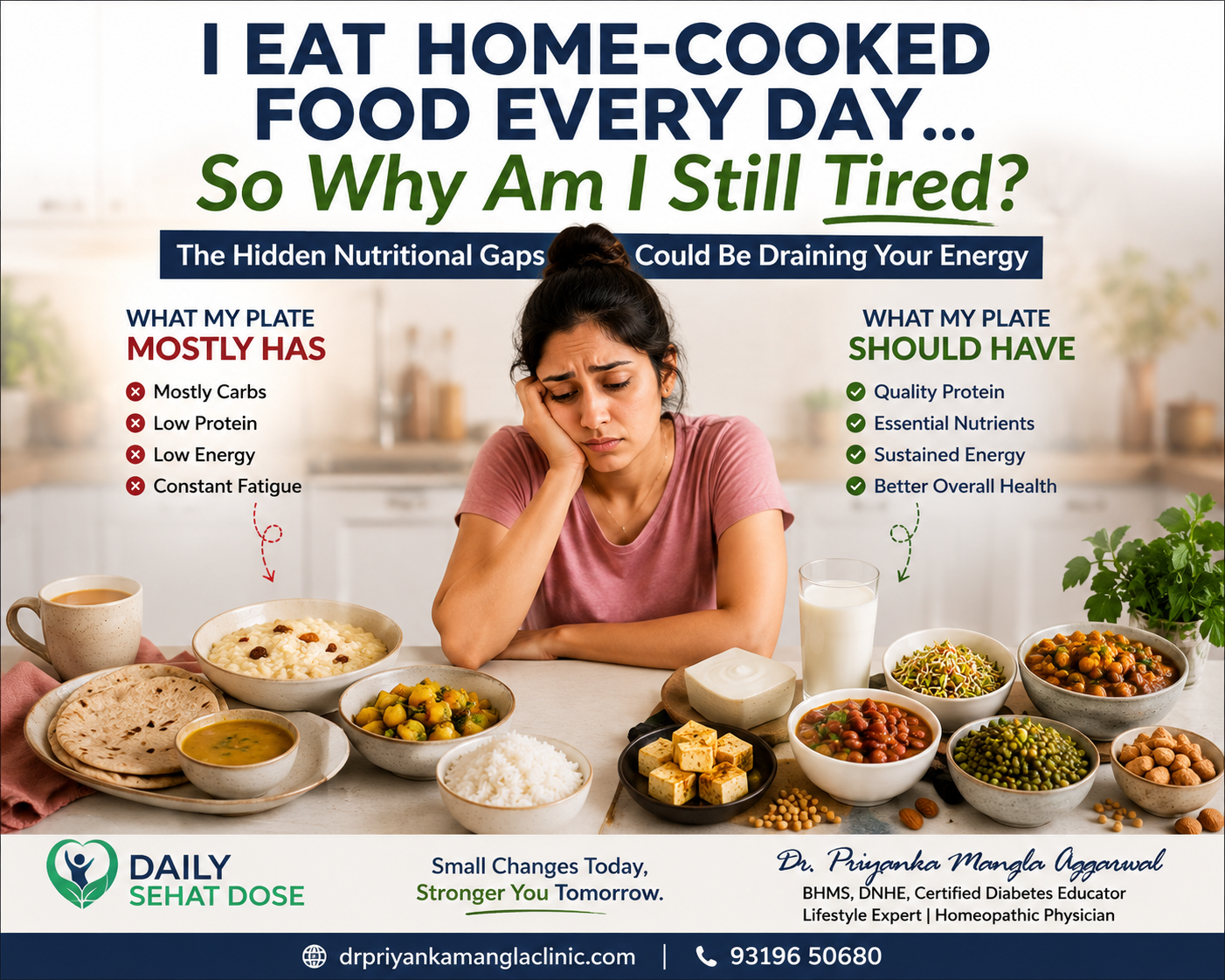
A Hidden Nutritional Mistake Many Indian Vegetarians Make
By Dr. Priyanka Mangla Aggarwal (BHMS, DNHE, DE)
Lifestyle Expert | Homeopathic Physician
Daily Sehat Dose
Table of Contents
“Doctor, I don’t understand what’s wrong with me.”
Indian vegetarian protein combinations are one of the most overlooked aspects of a healthy diet. Megha thought she was eating healthy, yet she constantly felt tired.
Megha, a 34-year-old marketing professional, walked into my clinic looking exhausted.
“I don’t eat junk food. I rarely order food online. My mother-in-law cooks fresh meals every day. We hardly eat outside. Everyone says I have the healthiest diet in the family.”
Then she paused.
“But I still wake up tired.”
“I feel sleepy throughout the day.”
“Even a 15-minute walk leaves me exhausted.”
“I’ve stopped enjoying weekends because I don’t have the energy to go anywhere.”
She was worried.
“So many people survive on unhealthy food. I eat homemade meals every day. Then why do I feel like my body has no fuel?”
Her diet looked healthy… at first glance.

When I asked her what she usually ate, this was her answer.
Breakfast
A bowl of dalia with tea.
Mid-morning
Nothing.
Lunch
Two rotis, seasonal vegetables and a small bowl of dal.
Evening
Tea with biscuits.
Dinner
Rice, vegetables and sometimes curd.
If you looked quickly, you would probably call this a “healthy Indian diet.”
No pizza.
No burgers.
No soft drinks.
No deep-fried snacks.
Everything was homemade.
So where was the problem?
Healthy isn’t always nutritionally complete.
This is one of the biggest misconceptions I see in clinical practice.
Many people believe that home-cooked food automatically means balanced nutrition.
Unfortunately, that isn’t always true.
A meal can be freshly prepared, low in oil, and full of vegetables—yet still fall short of important nutrients.
One of those nutrients is protein.
Protein isn’t just for bodybuilders or people who go to the gym.
Every single cell in your body depends on it.
Why protein matters more than most people realize

Your body uses protein to:
✔ Build and repair muscles
✔ Produce hormones
✔ Make enzymes that digest food
✔ Support immunity
✔ Maintain healthy skin and hair
✔ Heal tissues after illness
✔ Keep you feeling full after meals
✔ Support healthy ageing
Think of protein as the bricks used to build and repair your body every single day.
Without enough good-quality protein, your body still keeps functioning—but not at its best.
“But Doctor… I eat dal every day.”
This is probably the most common sentence I hear.
Yes, dal is a wonderful food.
Rajma is healthy.
Chole are nutritious.
Sprouts are excellent.
Oats are good for you.
Dalia is wholesome.
But here’s something many people don’t know.
Not all vegetarian protein sources provide the same balance of essential amino acids.

Our body requires nine essential amino acids that it cannot make on its own.
Many plant foods contain protein, but some are naturally lower in one or more of these essential amino acids.
That’s where thoughtful meal planning becomes important.
Combining different plant foods—or including naturally complete vegetarian proteins (best vegetarian protein combinations) such as dairy or soy—can improve the overall quality of protein in your diet.
This doesn’t mean every meal has to be perfectly combined.
It means that variety matters.
Could low protein be the reason for your fatigue?
Maybe.
But maybe not.
Feeling tired all the time is never something you should self-diagnose.
Fatigue can have many causes, including:
- Iron deficiency (anemia)
- Vitamin B12 deficiency
- Vitamin D deficiency
- Thyroid disorders
- Poor sleep
- Chronic stress
- Depression or anxiety
- Diabetes
- Chronic infections
- Certain medications
- Inadequate calorie intake
- Low protein intake
That’s why persistent fatigue deserves a proper medical evaluation rather than a guess.
Small nutritional gaps add up over time
Imagine filling a water tank every day.
If you’re adding slightly less water than your family uses, the tank won’t become empty overnight.
But after weeks and months, you’ll begin to notice the shortage.
Nutrition often works the same way.
Small deficiencies may not cause immediate illness.
Instead, they gradually affect your energy, recovery, muscle strength, immunity and overall well-being.
Does this sound familiar?
Ask yourself these questions.
- Do you often feel tired despite getting enough sleep?
- Do you feel hungry soon after meals?
- Do you struggle to meet your daily protein needs?
- Is every meal mostly cereals with very little protein?
- Are you vegetarian and unsure whether you’re getting enough high-quality protein?
- Have you been trying to lose weight but keep losing muscle instead?
If you answered “yes” to several of these questions, it may be worth reviewing your diet with a qualified healthcare professional.
What you’ll learn next
In the next part of this guide, I’ll share:
- More than 50 practical Indian vegetarian protein combinations
- Which foods are naturally best vegetarian protein combinations
- The best breakfast, lunch and dinner combinations
- Common mistakes vegetarians make
- Simple ways to increase protein without expensive supplements
You may discover that improving your plate doesn’t require complicated diets—it simply requires understanding how everyday foods work together.
Leave a Reply