
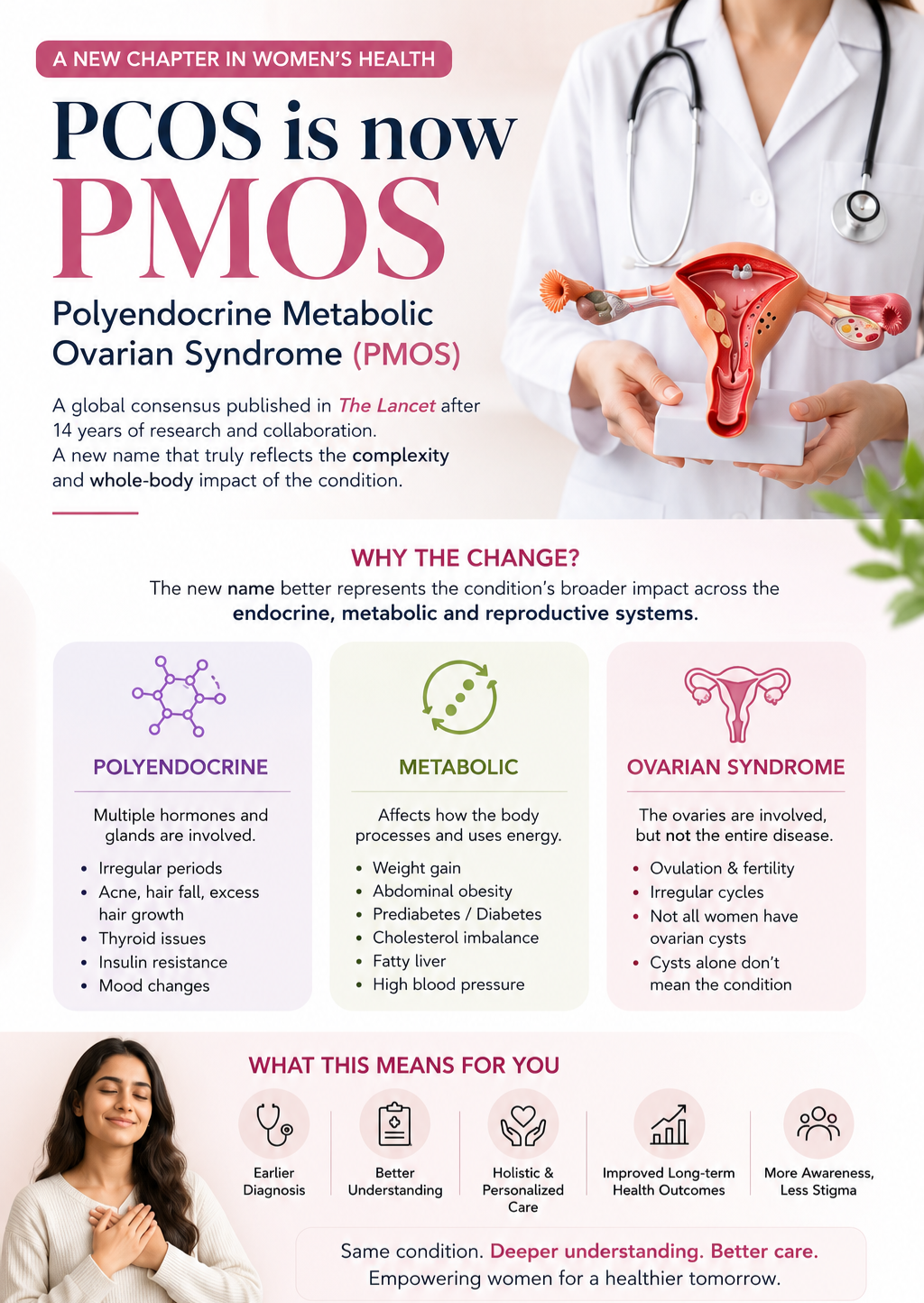
For years, millions of women were told they had “PCOS” — Polycystic Ovary Syndrome.
But now, after more than 14 years of global research and discussion, experts have officially proposed a new name:
PMOS – Polyendocrine Metabolic Ovarian Syndrome
The change was published in the medical journal The Lancet and involved researchers, endocrinologists, gynecologists, patient groups, and women living with the condition worldwide.
Why Was the Name Changed?
The term PCOS has long been considered misleading.
Many women diagnosed with PCOS:
1. do not actually have ovarian cysts
2. mainly suffer from hormonal and metabolic problems
3.experience symptoms affecting the whole body, not just ovaries
Experts believe the old name caused:
1.delayed diagnosis
2.confusion among patients
3. incomplete treatment approaches
4. excessive focus only on fertility or ultrasound findings
The new term PMOS reflects that this is a:
1. hormonal disorder
2. metabolic disorder
3. reproductive disorder
4. and often a whole-body inflammatory condition
What Does “PMOS” Actually Mean?
Polyendocrine
This explains symptoms like:
- irregular periods
- acne
- unwanted hair growth
- hair fall
- mood changes
- thyroid issues
- insulin resistance
Metabolic
The condition strongly affects metabolism.
Many women with PMOS may also develop:
- weight gain
- abdominal obesity
- fatty liver
- prediabetes
- type 2 diabetes
- cholesterol imbalance
- high blood pressure
This metabolic angle was often under-recognized earlier.
Ovarian Syndrome
The ovaries are still involved, especially ovulation and fertility, but they are not the entire disease.
This is important because many women were told:
“You don’t have cysts, so you don’t have PCOS.”
But doctors now emphasize:
- a woman can have the syndrome without obvious cysts
- and polycystic ovaries alone do not confirm the disorder
Does the Disease Change Because of the New Name?
No.
The symptoms, diagnosis, and management principles remain largely the same for now.
What changes is the understanding.
The new name may help:
- earlier diagnosis
- better awareness
- multidisciplinary treatment
- improved research funding
- reduced stigma around fertility and weight
Leave a Reply