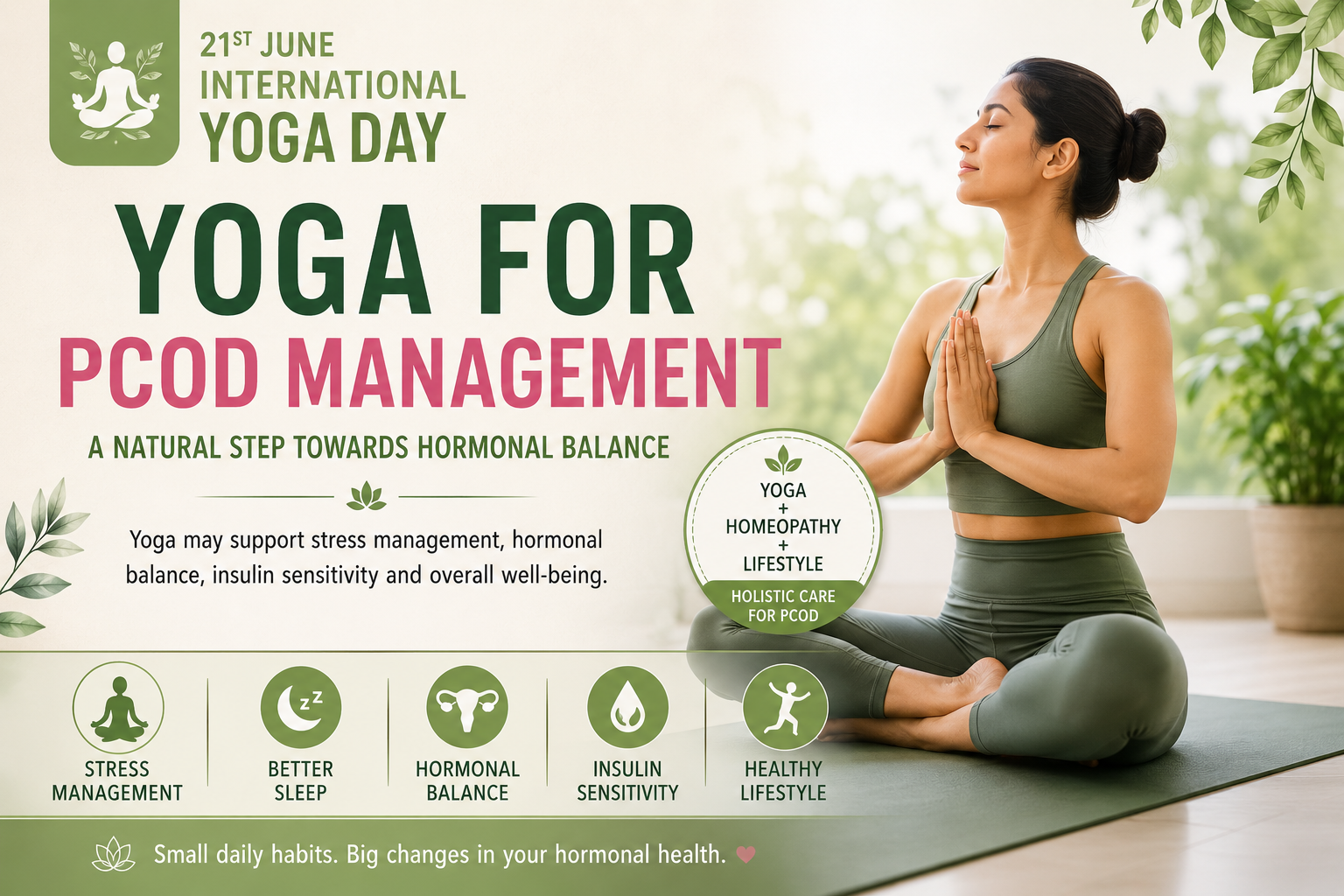
Every year, 21st June is celebrated as International Yoga Day, highlighting the importance of yoga as a practice for physical, mental and emotional well-being. Now , let’s understand how yoga is for PCOD
For women dealing with PCOD (Polycystic Ovary Disease) / PCOS (Polycystic Ovary Syndrome), yoga can become an important part of a healthy lifestyle routine.
PCOD is not only about irregular periods.
Many women experience a combination of symptoms such as:
✅Irregular menstrual cycles
✅Weight gain or difficulty losing weight
✅Acne and oily skin
✅Excess facial hair growth
✅Hair fall
✅Mood fluctuations
✅Stress and poor sleep
✅Insulin resistance
Because PCOD is influenced by multiple factors, including hormones, metabolism, stress and lifestyle, a holistic approach is often helpful.
How Yoga for PCOD Supports Hormonal Health
Yoga does not “cure” PCOD, but regular yoga practice may support overall hormonal health and lifestyle improvement.
1. Yoga may help manage stress hormones
Stress and hormonal imbalance are closely connected.
High stress levels may affect sleep, cravings, emotional health and daily habits.
Practices like:
- Pranayama
- Meditation
- Relaxation techniques may help calm the mind and support stress management.
Example: A woman with PCOD who experiences stress eating and disturbed sleep may benefit from combining yoga breathing practices with nutritional changes and proper routine.
2. Yoga and insulin resistance in PCOD
Many women with PCOD have concerns related to insulin resistance, which can influence weight management and cravings.
Regular movement, including yoga along with a balanced diet, may support better metabolic health.
Example: A woman struggling with abdominal weight gain and fatigue may benefit from a routine that includes yoga, walking, strength exercises and a PCOD-friendly diet plan.
3. Yoga supports weight management and consistency
Sustainable habits matter more than short-term efforts.
Yoga improves flexibility, body awareness and helps many people stay consistent with physical activity.
4. Yoga may support better sleep and emotional wellness
Sleep disturbance is common in many women with PCOD.
A calming evening yoga routine may help create better sleep habits, which are important for overall hormonal wellness.
Best Yoga Poses for PCOD (Beginner Friendly)
Depending on individual comfort and fitness level, women may include:
- Surya Namaskar
- Bhujangasana (Cobra Pose)
- Setu Bandhasana (Bridge Pose)
- Balasana (Child Pose)
- Marjariasana (Cat-Cow Stretch)
- Pranayama
- Meditation.
Consistency is more important than doing difficult poses.
Role of Homeopathy in PCOD Management
PCOD is a condition where every woman may present differently.
One woman may have:
Irregular periods with weight gain
Another may have:
Acne, hair fall and emotional symptoms
Another may have:
Difficulty with ovulation and fertility concerns
In homeopathic practice, the approach is individualised — considering the complete symptom picture, lifestyle factors and overall health pattern.
Homeopathy aims to support the body’s natural regulation and may be considered as part of a personalised wellness approach.
(PCOD management should always include appropriate medical evaluation and monitoring whenever required.)
How Homeopathy and Yoga Can Go Hand in Hand in PCOD
Yoga and homeopathy both follow a holistic approach where the focus is not only on one symptom but on the person as a whole.
Yoga supports:
✓ Stress management
✓ Physical activity
✓ Mind-body connection
✓ Healthy lifestyle habits
Homeopathic care focuses on:
✓ Individual symptom assessment
✓ Personalised approach
✓ Overall well-being
Together, along with nutrition and lifestyle changes, they can become part of a comprehensive PCOD wellness plan.
PCOD Recovery Is About Creating Balance
Managing PCOD is not about following one single remedy, diet or exercise.
It is about building sustainable habits:
✓ Nutritious food choices
✓ Regular movement
✓ Stress management
✓ Good sleep
✓ Emotional wellness
✓ Personalised healthcare guidance
This International Yoga Day, 21st June, let yoga become a reminder that hormonal health is also connected with lifestyle, mind and daily choices.
Your body needs support, not punishment.
Dr Priyanka Mangla Aggarwal
BHMS | Lifestyle & Wellness Educator
PCOD, Hormonal Health & Natural Wellness
Disclaimer: Yoga and lifestyle practices are supportive measures and should not replace medical diagnosis or treatment when required.
https://share.google/cif4iJ29Hrbp1PhLi
Leave a Reply